
Polk County Court Dockets
A docket is the court's running list of case events and hearings. In Polk County District Court, docket information can show what has happened in a case and what is set next. A calendar entry is narrower. It focuses on scheduled hearings for a day or date range, while the full case record can include pleadings, court orders, documents, judgments, and financial data.
Polk County has one District Court location for civil, criminal, family, probate, juvenile, and traffic matters. Minnesota does not send Polk County cases to separate municipal, JP, or county courts for local trial-court dockets. The docket source is therefore the District Court system, with online access through MCRO and local confirmation through Court Administration.
| Record View | Best Use | Limit |
|---|---|---|
| Daily calendar | Checking hearing time, courtroom, Zoom, and officer | Does not show every case or full file history. |
| MCRO Hearing Search | Searching hearings by name, case, judicial officer, or attorney | Remote limits can omit protected matters. |
| MCRO Case Search | Reviewing register of actions and case status | Some documents or pending cases may not appear by name. |
| Court Administration | Confirming notices, certified copies, and access questions | Office contact is required for non-online issues. |
Search Polk County Hearing Dockets
The main hearing lookup is MCRO Hearing Search. It supports searches by party or business name, case number, judicial officer, or attorney. Select Polk County in court locations when the filter appears. A hearing-date range helps avoid pulling statewide results that are too broad.
Searches work best when the user has the exact case number. Polk case numbers in calendar examples include 60-CR-26-736, 60-CV-26-804, 60-FA-25-401, 60-PR-26-858, and 60-VB-26-485. Name searches are useful, but criminal, traffic, and petty cases with no conviction may not always return by defendant name.
- Open MCRO Hearing Search and accept the access terms.
- Choose name, case number, judicial officer, or attorney search.
- Enter a hearing date or date range when checking a calendar date.
- Set the court location to Polk County if the search allows county filtering.
- Review hearing type, time, location, judicial officer, and case number.
The assigned docket screenshot comes from MCRO Hearing Search.
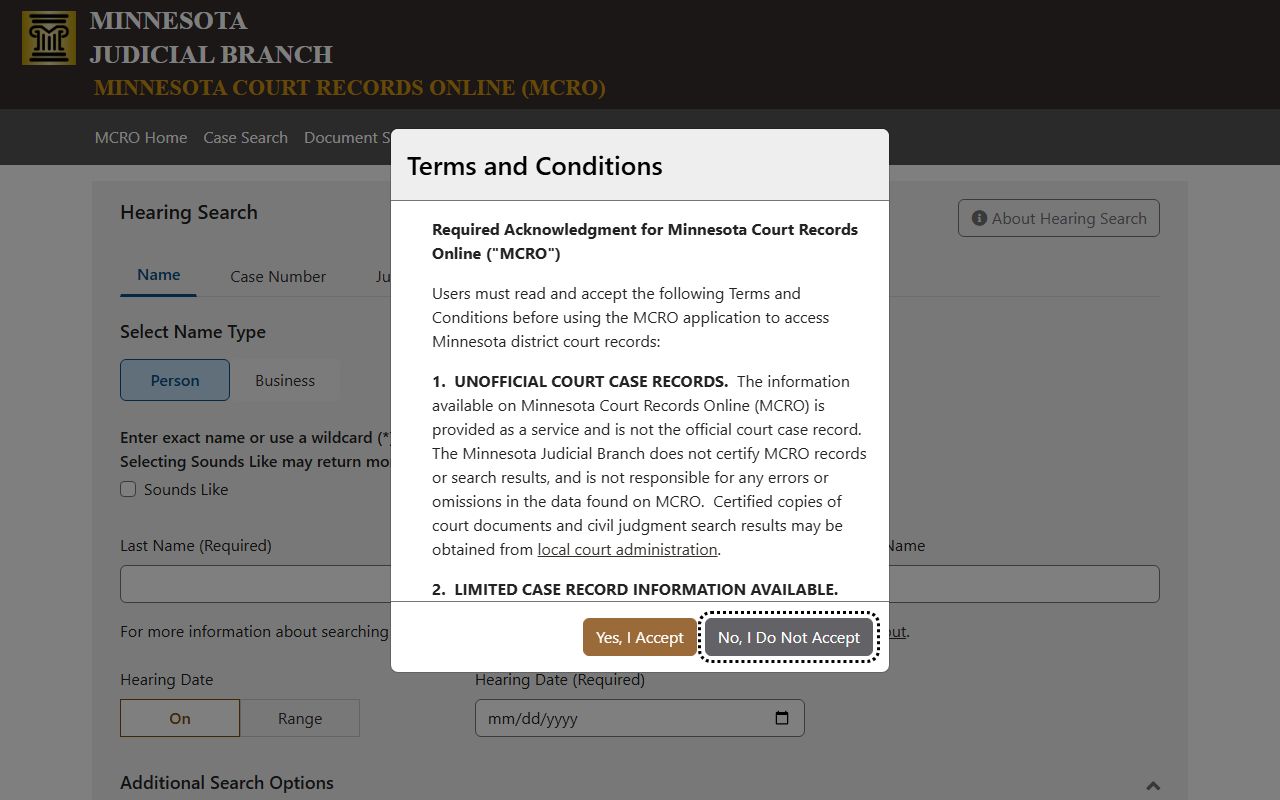
Use the docket result as a planning tool, not as proof that a hearing was canceled. If a case does not appear, Court Administration is still the right confirmation point.
Polk County Docket Fields
The Polk daily calendar provides unusually clear field data. It is headed as a District Court Calendar for Polk County and includes party name, hearing location, hearing date, time, judicial officer, hearing type, connection type, and case number. The calendar also shows local hearing locations such as Courtroom 1, Courtroom 2, Courtroom 3, Zoom, and some blank or administrative lines.
| Field | What It Shows |
|---|---|
| Party name | The listed person or business tied to the scheduled event. |
| Connection type | Role such as defendant, plaintiff, respondent, or petitioner. |
| Hearing date and time | When the court event is set on the public calendar. |
| Hearing location | Courtroom 1, Courtroom 2, Courtroom 3, Zoom, or another listed location. |
| Judicial officer | The judge or officer assigned to the hearing. |
| Hearing type | Event label such as arraignment, pre-trial, omnibus, sentencing, eviction, or probate hearing. |
| Case number | The District Court file number, often beginning with 60 for Polk County. |
Polk calendar examples include judicial officers Max LaCoursiere, Jeffrey Scott Remick, Corey Harbott, and administrative "File or Appear" entries. Hearing types include arraignment, first appearance, Rule 8 initial appearance, contested omnibus, plea hearing, sentencing, probation violation hearing, eviction hearing, scheduling conference, evidentiary hearing, motion hearing, probate hearing, administrative conference, jury trial, and review hearing.
Polk County Daily Calendar
The Polk County District Court page links to a daily calendar PDF. Research found that it is searchable, posted on business days, and updated hourly. It can help users check courtroom or Zoom details for the day, but it should not replace a mailed, emailed, or personally served court notice. The official court calendar warning says a missing case should not be treated as proof that the appearance was canceled or rescheduled.
Daily calendar entries also show how varied Polk County court dockets are. One calendar can include criminal first appearances, probation violations, family hearings, probate hearings, evictions, traffic or violations bureau matters, and administrative conferences. That range reflects the District Court's general jurisdiction in Minnesota.
The calendar is most useful when paired with the case number from MCRO. A party can compare the case number, party role, hearing type, and location before leaving for court. Courtroom 1, Courtroom 2, and Courtroom 3 entries point to in-person settings at the Justice Center. Zoom entries mean the hearing is remote or hybrid, but the calendar alone should not be used to guess the meeting link or password.
Administrative lines can be easy to misread. "File or Appear" entries and administrative conferences may involve filing deadlines, a required appearance, or a court-managed event. A person who is a party to the case should use the notice from the court or call Court Administration when the public calendar wording is unclear.
Note: Confidential cases and cases not remotely accessible under Rule 8 are omitted from public calendar results.
Courts Publishing Polk Dockets
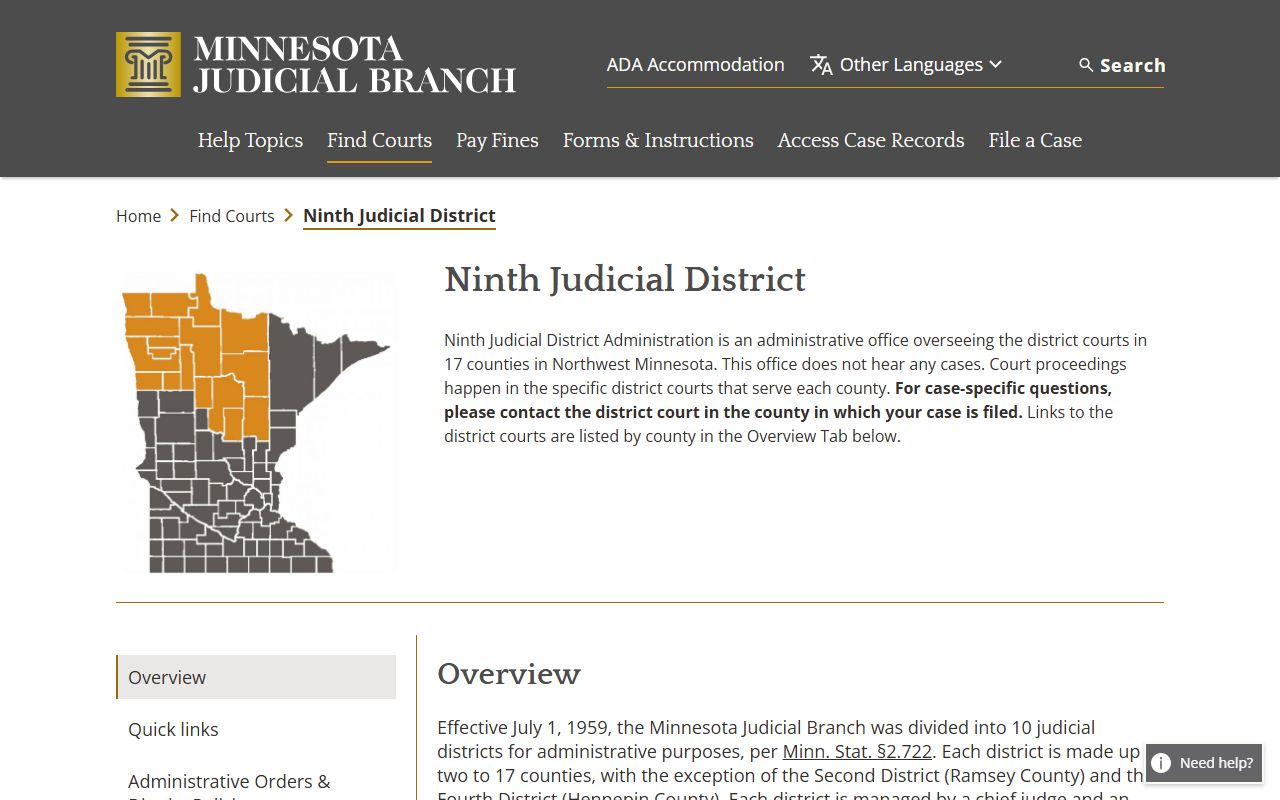
Polk County court dockets come from the District Court. The court is part of the Ninth Judicial District, which oversees district courts in 17 northwest Minnesota counties. District administration does not hear cases itself. Case-specific questions go to the county court where the case is filed.
- Polk County District Court handles civil, criminal, family, probate, juvenile, and traffic dockets.
- Ninth Judicial District Administration oversees the regional district court system but is not the hearing court.
- The Minnesota Court of Appeals handles most appeals after final District Court decisions.
- The Minnesota Supreme Court is the court of last resort and handles limited direct matters.
The Ninth Judicial District source image comes from the official district page.
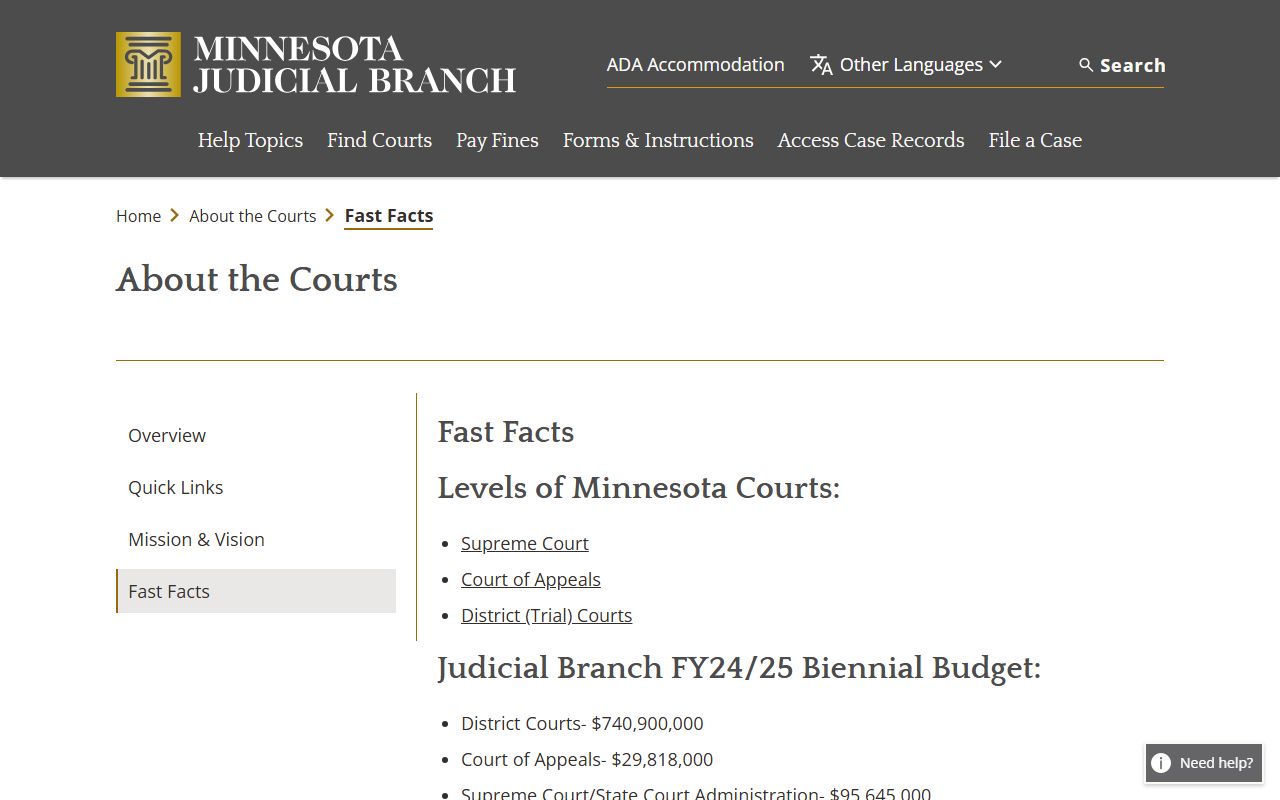
The broader Minnesota court system is summarized in official Judicial Branch fast facts.
Polk Dockets vs Case Records
A docket is a map of activity. A full court record is the file behind that activity. The docket can show that a motion hearing occurred or a sentencing was scheduled, but the full record may include the motion, affidavits, order, sentence details, and financial obligations. Some full documents appear through MCRO Document Search, while others require Court Administration or courthouse terminal access.
| Docket or Calendar | Full Case Record | |
|---|---|---|
| Format | List of hearings and events | Case summary, register of actions, orders, filings, and documents |
| Best use | Checking time, courtroom, Zoom, and next event | Reviewing legal filings, results, judgments, and certified documents |
| Access route | Hearing Search or daily calendar | Case Search, Document Search, public terminals, or Court Administration |
| Limits | Confidential and non-remote cases may be omitted | Some files need in-person or certified-copy handling |
Judgment information has its own search route through MCRO Judgment Search.
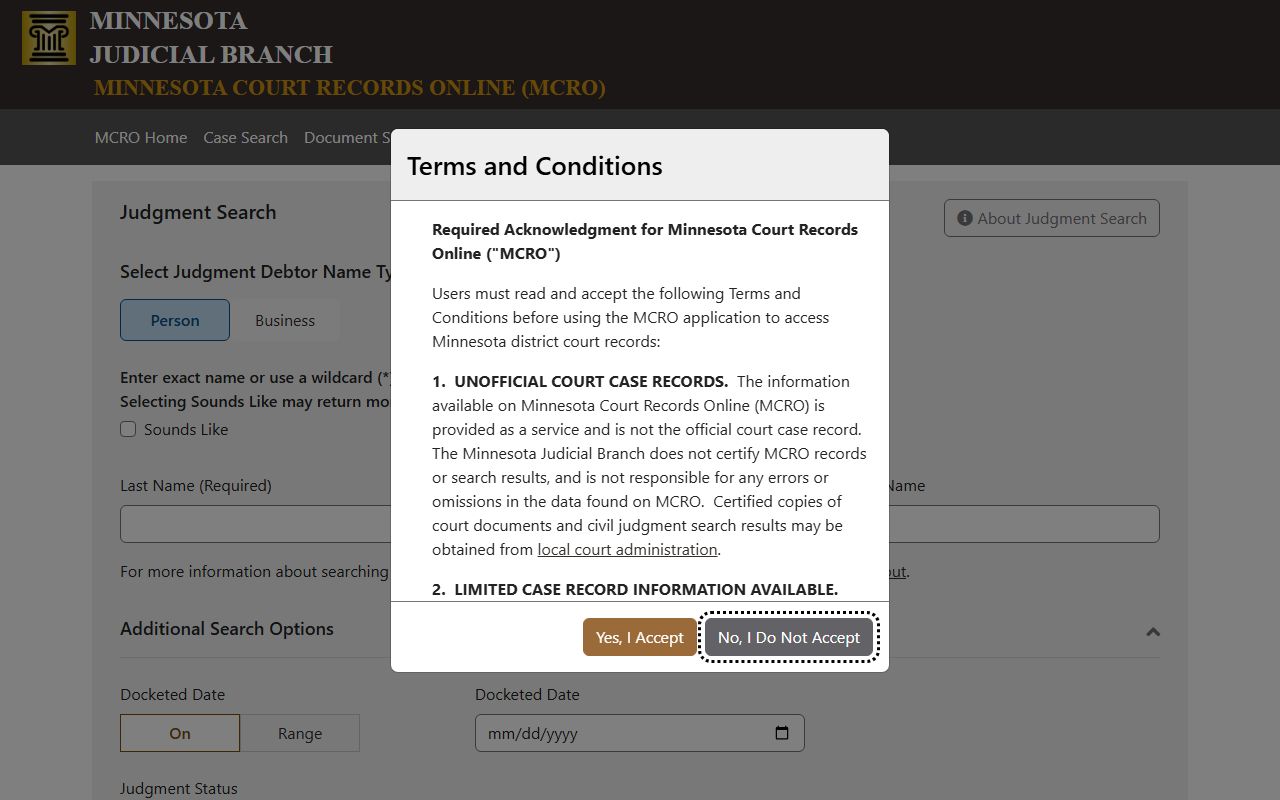
Read Polk County Dockets
Common docket terms are short but important. Arraignment and first appearance are early criminal court settings. Rule 8 refers to a Minnesota criminal procedure hearing type seen on Polk calendars. Omnibus and contested omnibus hearings are pretrial criminal hearings that often address evidence and procedure. A disposition is the final result of a charge or case. A continuance means the hearing was rescheduled.
Zoom entries should be read with care. The Ninth Judicial District offers Zoom test sessions for device and connection testing, but those test sessions do not connect a user to an actual court hearing. A party should use the hearing notice or Court Administration for the correct link, meeting details, and appearance rules.
Location and connection type should be checked together. A defendant, plaintiff, respondent, or petitioner may see a connection type next to a hearing location, and that pairing helps explain why the party is listed on the docket. Some entries identify a hearing as sentencing, probation violation, motion hearing, probate hearing, eviction hearing, or scheduling conference. The label gives the purpose of the court date, but it does not show all documents filed before the event.
For criminal matters, a docket date may show the next court step without proving the final outcome. For family and probate matters, the calendar can confirm a hearing but may not show the sensitive filings that led to it. For traffic and violations bureau matters, a case number or citation number is often more reliable than a name search because pending matters may be hard to find by defendant name.
For full case history, use MCRO Case Search or the broader Polk County court records access process. For certified orders, official copies, or docket questions that affect an appearance, contact Court Administration at the Polk County Justice Center.